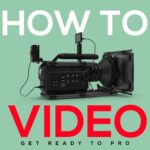

Welcome back to How To Video. In this episode, Gonzo D and John Wee unbox roughly $10K of cinema gear that changes how a small crew moves on set: the DJI Ronin 4D cinema camera, the Easy Rig Mini Max body support, and the Stabil Light.
What this episode covers
- DJI Ronin 4D first look — Build quality, the 4-axis gimbal vs a conventional 3-axis rig, the integrated LiDAR focus module, and the full-frame Zenmuse X9 sensor.
- Easy Rig Mini Max walkthrough — Fit, load-range geometry, how long you can realistically shoot handheld, and where it shines vs a standard chest rig.
- Stabil Light first impressions — Form factor, build, and where it fits in a run-and-gun kit.
- Who this gear is for — Solo operators, two-person crews, corporate video teams, and documentary shooters.
Gear mentioned
- DJI Ronin 4D (6K / 8K) — 4-axis stabilized cinema camera
- Easy Rig Mini Max — body support for 5–10 kg cameras
- Stabil Light
Chapters (26:26)
Jump to any moment in the episode.
- 00:00 Why we bought the DJI 4D — the F1 movie effect
- 02:30 First power-on and early firmware quirks
- 06:00 How the 4D stacks up against Komodo and the compact Panasonic
- 09:00 The 4D's stabilization system in real shooting
- 13:00 Lens balance — the 70-200 f/2.8 on a run-and-gun rig
- 17:30 Who this camera is actually for
- 20:00 Unboxing the EasyRig MiniMax + Stabil
- 23:30 Why the MiniMax changes long-handheld days
- 26:00 Final verdict and who should buy
Subscribe and never miss an episode
Follow How To Video on your favorite platform so new episodes show up automatically:
Keep exploring
More from How To Video Ep 4: Unboxing $10K of Cinema Gear — DJI 4D + Easy Rig and the 210 Digital Marketing team:
- how we use this gear on client shoots
- Ep 3 — Apple Vision Pro for filmmakers
- Ep 2 — full gear breakdown
Full transcript
Read the full transcript
This is an AI-assisted transcript of the audio episode. It may contain minor transcription errors.
And welcome to another episode of How to Video with John We and Gonzode. And John, today we are going to talk about DJI 4D camera and the easy rig Mini Max with stable light feature. That's the new toy that you got from the… We got these toys out because… Formula One just came out. And I saw…
F1 with Brad Pitt. With Brad Pitt. And the director was using the DJI 4D. And we thought, we've got to get our hands on this. When it came out, it looked ridiculous. What are these guys trying to do and all of a sudden,
it's starting to see online the kind of stuff that people are doing. Today, you got to experience it. What are your thoughts? Because I already drank the Kool-Aid up to the gills with intoxication. And it's important to speak with someone who… Your background is…
You're a Fuji. You're a Fuji kind of guy. I led… I had a Fuji camera. And I owned the red. Still have the red… Scarlet.
A fabulous camera on me. It's extraordinary. Still the Fincher film. David Fincher did film his movie with that camera when it first came out. Recording in RAW is really something else. Yeah, first Super 35.
And then the gimbal came along. Remember the gimbal? You've used DJI products. You've used the Ronin. How was that back then? I think you were mentioning that it had some bugs.
Yeah, I had a V1, the Virgin one of the camera. I mean of the Ronin. But it was a big… It's a game changer. It's a game changer. I hate to use the word game changer.
Yeah, that word is game changer. But there are only certain type of products that really changes the industry, right? I think Super 35 sensor. That changes everything. Before that we have to use an adapter, 35 adapter to have that look. But Super 35 sensor came out, 5D mock two.
Changes everything. The 5D. Game changer. I mean it's a fair game to say that they are a game changer. And then after that, what else came out as a game changer? Stabilized.
Stabilized. DJI with drones. D-J-I. D-J-I made it simple to connect to a device. But even though you still needed to do some physical balancing, it automated the stabilization. And it really…
I remember the first footage that I made with a DJI stabilizer. I'll take that back. My first stabilizer was a Xeun, which is quite very similar. But I think the software from DJI is so much more easy to use. It's a little bit more stable. But your first stabilizer was the Steadicam.
Oh, that's right! That's right! You were a steady cam operator. I was a steady cam operator. And it made… Back then the cameras were really big.
So… but having a steady cam and knowing how to use it brought, you could just walk with it and get that nice, slow motion… Game changer, right? Stabilizer. Stabilizer. Great for facilities, showing real estate.
And I lost my equipment on a plane. So I was very scared of getting big equipment. And I'd get a big sweat after using it, my whole chest. But you don't feel it. And you can run around. That thing just moves in such an interesting way.
And remember, back then, that thing has to support 35mm film camera, which weight like 50-60 pounds. It was very heavy. It was very heavy. You could turn those knobs and carry some very heavy cameras. And then you can use the camera as a hammer. And now, stabilizers are mostly gimbals.
And we have this monster that has four axes. Thus the 4D. Yeah. Four axes of stabilization. Some people call it a goose, the duck. They call it the 4D.
The 4D. So, yeah, let's… so the Ronin was the game changer, right? But now you have to put your camera onto the Ronin. And now you have to deal with two different things. And what was that thing that it was placed on that gimbal, like a little… a cage? Not little.
It was quite big. Yeah, a cage. A cage so that you can hang everything. And then now, you're back to the problem again, having to adjust two different things. And then it's the rig becoming heavy. And it will kill your back.
Yeah, you can only film for about, what, 20 to 30 seconds with a large camera and a large lens. Before you have to stop. Before you have to stop. And I'm getting a little older. I'm in my late 40s. You as well.
No, I'm in my late 20s. What are you talking about? Well, John, your spirit is. And that's where we hang out. But the lower back is an issue. Which we'll talk about later with the easy rig.
Oh, yeah. Why? So the 40, it's not a small camera. Yeah, so now, running came out with the 40, right? And then it says, hey, let's combine a camera with ProRes and raw. It's Q and raw.
Into one device. The license is now $1. Is it really? It's $1 for the 6K system. And it is included in the 8K system. By the way, 8K might be very overkill for many.
But it's really nice to be able to crop. It doesn't mean that you're creating it for a large format. Oh, it's also free. I was kind of shocked with that. I was so happy. Why were you so excited about that?
Because I wouldn't think that they are able to put such a big sensor. It's a large sensor. And they separated the sensor from the brain. You go, where's the sensor? And you go, why is the sensor separated from the camera? Because it's all, it's, and then it was a little complicated.
We used some e-mounts today, some Sony. We used a 50mm, a 1.2 aperture. I really love the buttery background. We're still learning how to use it. But what was your experience once you held on to that? It feels like you're driving a car.
It feels like I'm driving a very complicated F1 car. It is a very complicated system. There's a lot going on to do. It feels like going from the Super Nintendo to the PlayStation. What are I going to do with all of these buttons? I think that's also the only reason, not the only reason,
but the main reason why if you go to YouTube, you're going to see people with negative review of the thing. Because it is just a complex system. Again, because you're combining a camera, a capable camera, with stabilization all in one. You need to invest some time to learn it.
Yeah, it's not an either or. It's almost like here. You're stuck with a stabilization system and a camera. It's not light. I think a big movement that's happening in videography is simplicity and small. Although you can't really go too small with lenses.
There is a caveat that your camera can get very small, just around the size of a sensor. Now we have the Komodo and we have even the small Panasonic. Those little boxes, it's almost like here's the brain. Smaller is better. But the lens, a good lens still has a little bit of weight on it.
Yes. And also, however, DJI bought Hasselblad. Yes. Please don't tell me that they're not starting to bring a lot of their technology into their instruments. They only, I mean, just in the drones, some of the drones are using the Hasselblad lenses.
And the footage is incredible. When that footage from what drone was it with DJI, the DL lenses, is it the Inspire? The Inspire was the first filmmaking. That was the first one using the DJI DL lenses. That's the big one, yeah.
And now this camera can use the DL lenses. The 8K package comes with a 17 to 29 zoom. Which, by the way, it stabilizes a zoom automatically. Which is wild. How big is a lens, you know? They're small.
They're like little… tubes. Oh wow. And the quality is really really impressive. As we've spoken, a camera will not make a filmmaker. Nor a lens. You might see a big difference when you start using a good lens, but you can still, if you don't know what you're capturing, you're just capturing a mess. A hammer doesn't make a house. A hammer does not make a house. That's the… Occupical Make a house. That's a great metaphor. By the way, we're overlooking the…
Yeah, I wish you guys could see this view. Yeah. And we're not going to film it because you know what? Audio is great. And cameras… I'm looking at my watch right now, so we are over at 4,413 feet. 4,000… I was starting to get some separation anxiety. I thought you were going to say, let's wrap this up. I got things to do. Overlooking the city, actually. What's the temperature going on?
It's very pleasant. I brought to you by Apple Watch. 77 degrees right now, according to my watch. It's nice and the car is stopping a little bit of the sun, which
this Idaho sun in the summer can get really strong. It's very relaxing. We're talking about, we came up to here to film. Maybe we can put a link to some of the footage and… We're still learning the camera though. So please do not criticize. I did feel like the first time I bought a Pro-seamer when I went from film to digital. I was still trying to get the hang of it. But it'll just like every platform, there's a lot of buttons. It's quite intuitive. What was impressive is to be able to use an adapter to use a Sony lens. That 50mm 1.2mm and it has internal ND.
I mean, changing ND filters on the camera, it takes time. Even the variable ones from Tifen. And if you're using a gimbal, it'll throw it off and you know that it just starts pulling away from it. You put a weight in front of the lens. I was experienced to be able to… I think that was nice, right? We were both just pushing and it goes… And you get the look that you want.
It comes with… The camera comes with an amazing scream which I go, wow. People, younger people might not appreciate internal ND but older people like us have been using cameras since the 90s, we know the pain of not having an internal This is my first time using an internal ND. I did not have the… What was it? The FX6 that had it and the Sony, the Venice… Who started the internal ND? Let me see. Who started it? That's a good question.
With the FX6 or the FX9? Oh my god, I don't remember who started it until the end. When I heard it, I thought, who needs it? But if you've ever filmed on a bright day and you go, I wish I could have had some blurry background, then you know what an ND is. And ideally the ideal form of NDs are by sliding them in. But that, you're already talking about multiple crews and the way things are going in Hollywood and all around in the geography cost, we have to make the best out of costs and smaller crews are probably going to be… Skeleton crew. Yeah, this is not a sponsored
message. We got this rig. I made the transition from Sony to DJI. I'm sorry Sony, not completely. I kept some lenses. Sony makes some amazing cameras and now with tariffs, it made me think twice about getting something and I just thought, no, Formula One came out and there were some scenes where there's a lot of movement and you can definitely tell that somebody was running with a camera.
I bet you, when the Sony A7S4 comes out, you're still going to get tempted. Yeah, I know it's just around the corner from those with all these tariffs. You know why? Probably not because I do want to have a little bit more movement and a little bit more organic. Personally, we've been doing a little bit more documentary and corporate. Yeah. And I think I'm just tired of having people sit down. I want them to walk. I want them to lie against the wall and which brings us to the easy rig. We're still not done with the 4D DJI. When you saw that, it's a very… You could tell how much time and attention
was spent on a design. You can't say that they stole any ideas. I mean… The build quality is excellent.
It's the build quality is really excellent. When I took it out of the box of my jaw, just dropped. I thought, oh gosh. And they just had a big discount. I think the 6k packages, 5,000 and the 8k package, 10,000 includes a solid state drive to record raw directly and it includes a 17 to 29 millimeter lens which you can cover. It includes that lens. So it's a great deal. But it also for some, it's almost like, why am I throwing myself completely into this? And well, we decided to do it. And I like it. The reality is I like it. It's just a little on the heavy side even though you grab it
and it's like a car-spiering wheel. You didn't think so? No. I was getting comfortable with small cameras. It's carrying them with a lens like a 70 to 200. When did you start having a 70 to 20 lenses? Yeah, you're Sony. And putting the hang out. I'm beat at the next after the next day. Yeah. If you put like the 70 to 200, yeah, it's going to be, is it an F-28 lens, right? It was a 2.8. Yeah, then it can get a little heavy. But I mean, it was hard to say goodbye to it. It's solid. I mean, the camera, the DJI is just a solid built quality camera. That's my first impression.
That was my first impression. The quality looks DJI has absolutely, I think they've done it with drones. They don't care if they do something different. When they did those…
Propellers? When the propellers folded inside just to make smaller, they really think about like, what else can we do? What are people complaining about? How can we make it smaller? In this case, that's a lot of stuff all compacted in one. They listen to their customer for sure. I think they are. That's really something. There's a lot of companies that just go like, this is who we are and we're going to stay like that. And it's, you know what, the world seems to need change. It's hard. Exactly. I mean, red came and kicked a lot of people.
That's a big game changer. The raw, oh, Super 35 raw. That's why I got my scarlet back in the days when it first came out with a project that pretty much paid for the whole thing. That's amazing. That was brilliant too. And both of us, we don't do this for cloud or views. We could care less. Obviously, we do want to share some of what we've done, but we do it for a living. And we do it to get sales, which I think sometimes the views and the amount of subscribers. The YouTube users. Yeah, just because you have a lot of users doesn't mean that they're going to go in and become
the lifetime value of clients. I don't know. You do need a balance. Social media is so important. And a lot of the footage here, someone might say, like, why do I need this if I'm going to use vertical? Well, there's something about doing content that's still going to show on a large format or even in high quality on vertical and telling stories still in art. I've seen some people do some amazing things. That is still the core of everything. Yeah. And we film in Lofi, we film with the Apple phone. The footage is incredible, but it's still not full frame. Okay, you want to go back to the
EZ rig? Oh, yeah. Let's finish off with the EZ rig. EZ rig. I had no idea this thing existed. I had seen some people with backpacks with this thing sticking out of their fishing pole. And being a Steadicam operator, I looked at it as people who tried to avoid the good quality stuff. And what I realized is that it's a completely different approach. And I read a lot about it saved my back and saved my back. I think everybody was saying, I wish I could have got this earlier. And I've ended up on the floor with pain. So for me, it was a no-brainer.
There's some knockoffs that are not cheap. And I just thought, why go cheap when you're going to carry expensive? If you have a $10,000 plus camera, you don't put it on a cheap thing that's going to break. So we went with a Swedish made EZ rig that you recommended. And it's the Mini Max with a stable light. And what were your thoughts? It is very light. My, okay, my first philosophy on the on health. So you see this thing, he says, all right, $2,500, right? You say, Oh, this is so expensive. But what do you see
your hospital bill? Oh gosh, you that's that's the best perspective to put on. Wait till you see your hospital bill. Any back any x-ray and rehabilitation program for your back is more than 2,500. It's so interesting that we'll spend so much money on we'll buy a hundred ten dollar coffees throughout the year. But God forbid you buy a piece of equipment that might last you for your whole life. The steady cam that I had, I would have never let it go if it weren't because it got lost
on an airplane in Mexico. And also steady cam, it's like a tripod, right? It's 10 years down the road when you have a new camera, assuming camera is still in the same metaphysical form, you can still use your tripod. You can still use your eyes. We still have the same tripods. Yeah. A good tripod. You don't let go of that, no matter how beaten it is, you kind of go like, man, this is steady and it goes down, it goes up. Yeah, it's worthwhile. It's a worthwhile investment. I'm actually
thinking about letting go of a tripod. I'm gonna try using a little bit of the follow focus with a 4-day and using the EZ rig. This view is very relaxing. I almost have one feeling like going off topic. No, there's a breeze coming in. EZ rig, Swedish made, there's a reason why it costs that much and it's so simple. Because when you see it you kind of go like, well did I really pay this amount for this? And once you try it, how it's so light? It is very light and the moment
you strap the hip belt. Yeah, you can feel the way to the hips. Which is everything. My back is not hurting. We were filming here for about half an hour. Usually I would have been very tense and whoever designed that, my hats off, there's a lot of videos of him but a strong Swedish accent. I love how excited he is about it. You can definitely tell. I think there's an EZ rig as well for a microphone. Is it really? Yeah, I thought it was brilliant. It was just one hand.
I was thinking, I wonder if you could put a microphone on that stable and go ahead and have a one-man. You probably can put your lunchbox to and then eat it. It does have a little pocket. It does have a little pocket. By the way I did put Apple tags on absolutely everything. The box, the camera. So now we need insurance. Yeah, definitely. I think it's a very… Maybe we can make an episode about insurance. I think it's really important. The importance of insurance. Yeah, let's
do that for the next episode. And with that, yeah I think it's a good, it's a great combo because I know overall with the summary DJI, hats off to these guys. I hope that the tariffs and all of these things that are happening. So many people that really make a living out of reselling great products and we need more change and people that are willing to take risks. What DJI did and what I've heard that they're firmwares and they're updates and now being able to use Sony
PL, Laker. It's really amazing that you can keep your lenses and use it on this. The lock on this DJI camera is also like the PL positive lock style where you turn and hold on the lens. That is the really solid way to do it. That was complicated. So what you're saying is that you're glad that you saw that that was in. I was expecting it to be like Sony and let me tell you something. The instructions, there should be a video just on how to use change the mounts because I
spent two hours trying to change it and I almost cried as a big adult. But trust me, I have seen Canon mounted with screws and just because they put heavy lenses in a long time I have seen the mount just came off. Really? And then the lens dropped to the ground. That's why you see those are heavy cinema lenses. Everything is PL positive lock because that will never happen. Yeah I wanted to. You know like a Sony I just wanted to put it in the hole and turn it to the right and I kept
trying to move it to the right and it's got nothing. You just put it in there and you pull the darn lever back to the left. Anyways. But you know what I'm waiting for from DJI I'm hoping one day they will be able to put a medium format hassle-blatt sensor with hassle-blatt color science into something. I'm thinking they've been they've been doing something to the color science because it looks really nice because we haven't seen the footage outside of the Sun but I
know. And also we recorded in ProRes HQ as well which I was kind of shocked at that little thing as you can do ProRes HQ. That's more than enough. Yeah that'll fill your computer. And by the way 6k 8k kids good luck you're gonna have to get some extra SSDs in a new computer. You have a 1 terabytes CF card for this one? Yeah I think it's from OCW. It was the highest bit rate that I found even higher than some Lexar and some Sandisk. So went with that and it's been doing great.
Okay let's wrap it up. Let's wrap it up. And I'll see you next time for the insurance.
How To Video is a series from the 210 Digital Marketing podcast, hosted by John Lee and Gonzo D — two working filmmakers pulling back the curtain on gear, workflow, and the business of professional video.